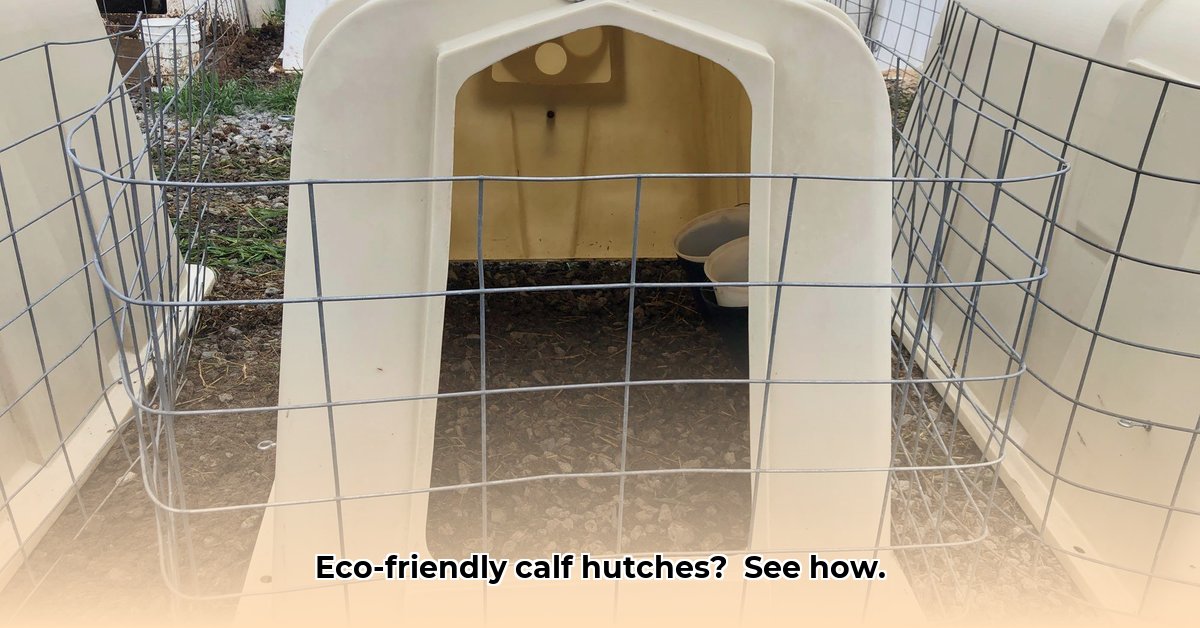
Choosing the right calf hutch isn't just about providing shelter; it's a significant decision impacting animal welfare, farm economics, and environmental sustainability. While Tractor Supply offers a range of options, navigating the complexities of sustainable choices requires careful consideration. This article delves into the factors defining a truly sustainable calf hutch, explores the current market landscape, and highlights the need for further research and collaboration to foster more eco-friendly practices in calf rearing. For more information on sustainable farming practices, check out this resource.
Understanding Sustainable Calf Hutches: A Three-Pronged Approach
What constitutes a "sustainable" calf hutch? It's not simply about using recycled materials. True sustainability requires a balanced approach incorporating three vital pillars:
- Animal Welfare: Does the hutch provide adequate protection from the elements, promoting calf health and minimizing stress?
- Economic Viability: Is the hutch durable and cost-effective, offering long-term value for the farmer? Frequent replacements represent significant financial and environmental burdens.
- Environmental Impact: What is the hutch's overall footprint? This encompasses material sourcing, manufacturing processes, transportation, and end-of-life management. Does it minimize resource depletion and waste generation?
A truly sustainable hutch excels across these three dimensions.
Current Market Landscape: Tractor Supply and Beyond
Tractor Supply offers a variety of calf hutches, each with its own set of material components and design features. However, comparing the long-term sustainability of these options proves challenging due to a lack of standardized metrics evaluating their lifecycle impact. Some hutches may utilize recycled materials, while others rely on traditional wood or plastic. The durability and longevity of these materials, under typical farm conditions, directly impact both economic viability and waste production. This lack of readily available data presents a significant challenge for farmers seeking to make informed, sustainable choices.
"It's frustrating to try to make informed decisions about calf hutch sustainability when the data simply isn't there," says Dr. Emily Carter, Professor of Agricultural Engineering at the University of California, Davis. "We need standardized metrics and more research to create a fair comparison between different hutch designs." This underlines the need for a comprehensive approach, considering the entire lifecycle of the product.
The Critical Need for Standardized Sustainability Metrics
Currently, comparing the environmental impact of different calf hutch designs remains incredibly difficult. How can we definitively assert which hutch is more sustainable without consistent data? A significant barrier to informed decision-making is the absence of standardized assessment methods. We lack comprehensive metrics to accurately weigh factors like:
- Full Lifecycle Assessment (LCA): Tracing the environmental impact from material sourcing to disposal is crucial.
- Material Composition and Sourcing: Understanding the origin and processing of materials is vital. Recycled materials should be assessed based on their recycling processes to ensure minimal environmental impact.
- Durability and Lifespan Testing: Standardized durability tests under various climate conditions are essential for accurate lifespan prediction.
Without these standardized metrics, effective comparison and genuine progress toward sustainable practices remain unattainable.
A Collaborative Approach to Sustainability
Improving the sustainability of calf hutches requires a collaborative effort. All stakeholders—farmers, manufacturers, researchers, and policymakers—must contribute:
Farmers: Prioritize long-term sustainability when selecting hutches. Consider their expected lifespan, ease of cleaning, and the environmental impact of the chosen materials.
Manufacturers: Promote transparency throughout the manufacturing process and offer lifecycle assessments for their products. Utilize sustainable materials and strive to reduce your environmental footprint.
Researchers and NGOs: Develop and implement standardized metrics for evaluating hutch sustainability. Conduct comprehensive research on optimal hutch designs, materials, and end-of-life management.
Policymakers: Develop policies and incentives promoting sustainable agricultural practices. This could include tax breaks for sustainable products or grants supporting research in this area.
Moving Forward: The Path to Sustainable Calf Rearing
The path towards truly sustainable calf hutches requires comprehensive research, standardized assessment methods, and collaboration across the entire supply chain. While challenges exist regarding the complexities of evaluating sustainability, the benefits – both for animal welfare and the environment – justify the investment in research and innovation within this critically important area. We need to move beyond anecdotal evidence and embrace a data-driven approach to achieve truly sustainable practices.